
HoneyBook and Aisle Planner: Should wedding planners use both?

Wedding planners have a very specific set of business needs.
You need a way to respond to inquiries, schedule consultations, send proposals, collect payments, and keep prospective clients moving toward a decision. Once a couple books, you also need to manage budgets, guest lists, vendors, design ideas, timelines, seating arrangements, and approximately a thousand other details.
HoneyBook and Aisle Planner can both help, but they approach the work from different directions.
Aisle Planner was designed specifically for wedding and event planning. HoneyBook focuses more broadly on managing the client journey, from the first inquiry through booking, payment, and onboarding.
For some wedding planners, Aisle Planner provides everything they need. For others, pairing it with HoneyBook creates a clearer, more efficient workflow.
The use case for both platforms
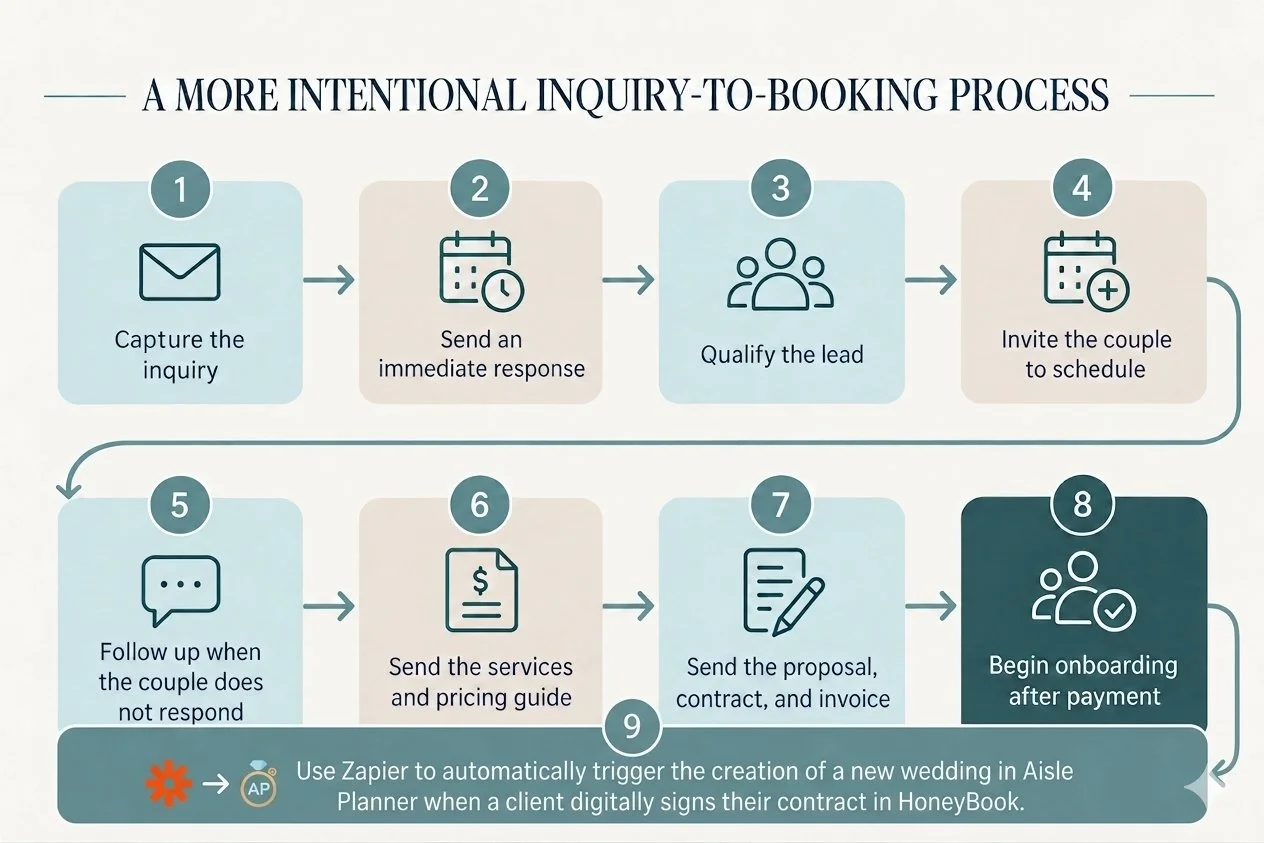
A couple’s experience with your company begins well before they sign a contract.
When someone submits an inquiry, they are evaluating how quickly you respond, how clearly you communicate, and how easy you make it to take the next step. HoneyBook can help turn that early experience into a structured sales process, without requiring duplicate record-keeping for you.
Once the couple has officially booked, their project can move into Aisle Planner for the planning work.
That transition creates a natural dividing line. Prospective clients remain in HoneyBook, while booked clients receive access to the tools they will use to plan their wedding.
The advantages of using both
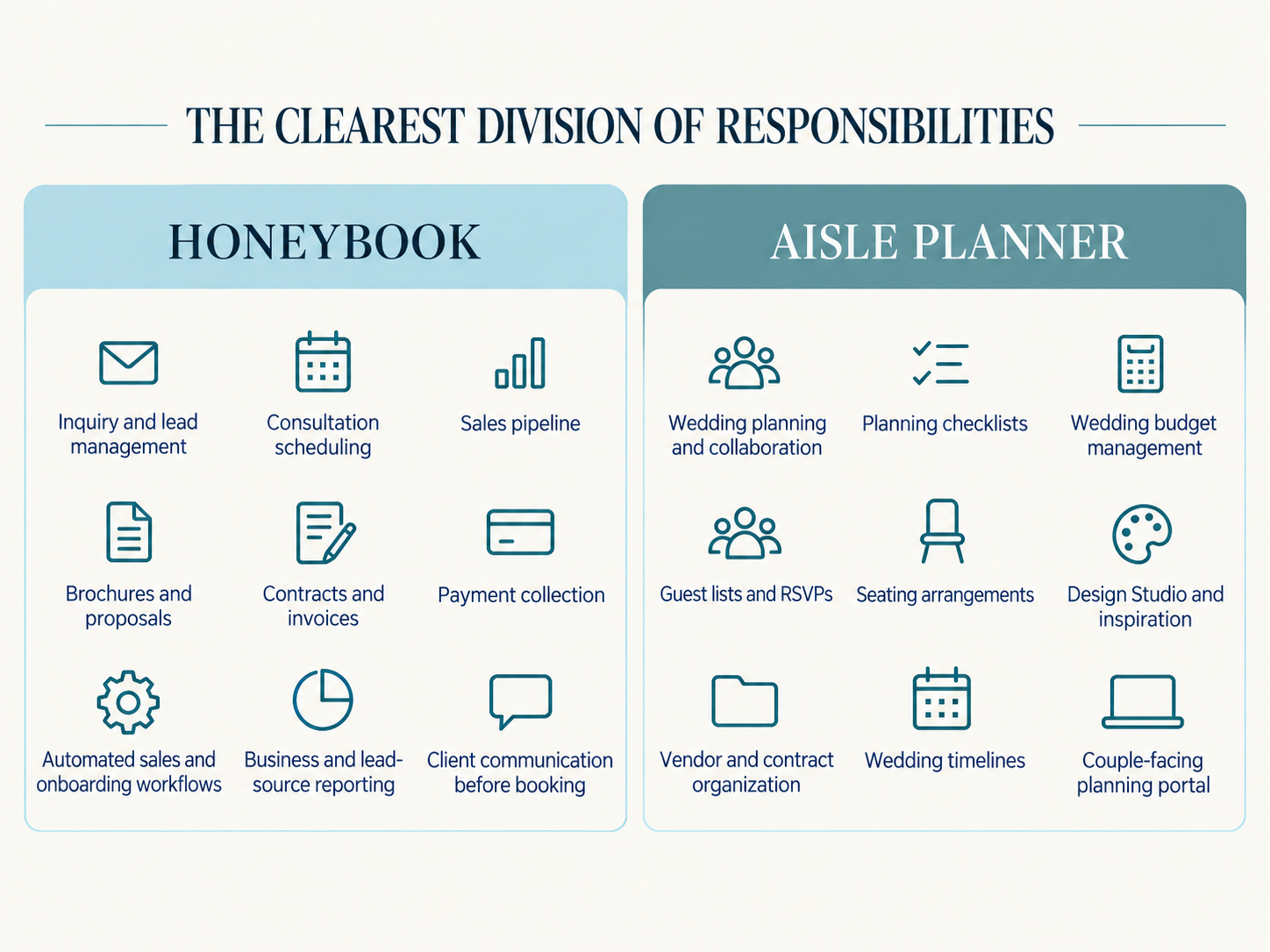
Each platform can focus on what it does best
Aisle Planner offers wedding-specific tools that would be difficult to recreate in a general client-management platform. HoneyBook provides tools designed to guide leads through an organized sales and booking process.
Using both allows a planner to keep Aisle Planner’s specialized planning features while building a more structured system for inquiries, follow-up, contracts, payments, and onboarding.
You gain a clearer view of the sales pipeline
HoneyBook can help a planner see where each prospective client stands.
Has the lead received pricing? Have they scheduled a consultation? Are they considering a proposal? Has the contract been signed? Is the first payment still outstanding?
That visibility becomes increasingly valuable as inquiry volume grows or multiple team members become involved in sales and client management.
Financial and contractual records have one home
A planner can choose HoneyBook as the source of truth for proposals, signed contracts, invoices, payment schedules, and client payments.
Aisle Planner can then house the information needed to plan and execute the wedding. This division reduces uncertainty about where the most important business records belong.
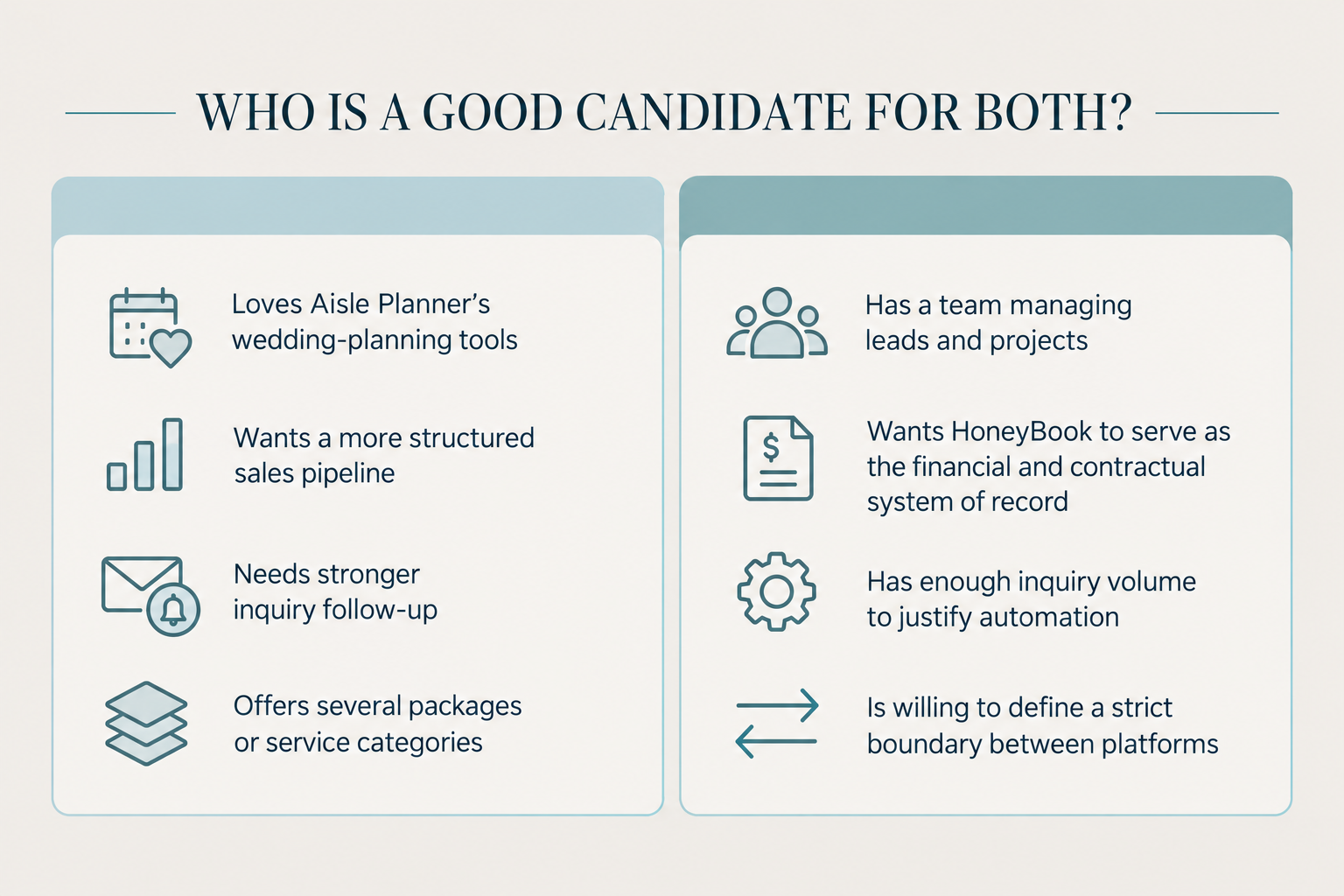
Do you actually need both?
HoneyBook can add value for an Aisle Planner user, but only when it solves a problem that currently exists.
If leads are slipping through the cracks, follow-up is inconsistent, booking requires too many manual steps, or the team cannot easily see where prospective clients stand, HoneyBook may provide the missing structure.
If Aisle Planner is already managing inquiries, bookings, payments, and planning to your satisfaction, another platform may add unnecessary complexity and cost.
The goal is not to collect more software. The goal is to create a comprehensive system that makes the next action clear for you, your team, and your clients.
